

Description
Rashtriya Swayamsevak Sangh 1952
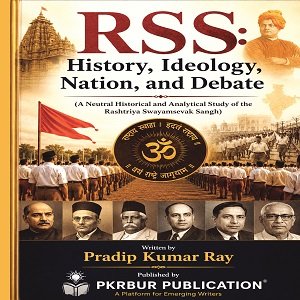
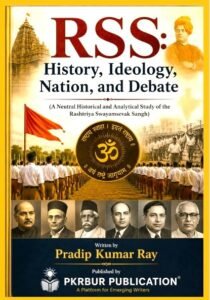
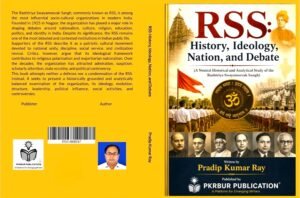
The Rashtriya Swayamsevak Sangh, commonly known as RSS, is among the most influential socio-cultural organizations in modern India. Founded in 1925 in Nagpur, the organization has played a major role in shaping debates around nationalism, culture, religion, education, politics, and identity in India. Despite its significance, the RSS remains one of the most debated and contested institutions in Indian public life. Supporters of the RSS describe it as a patriotic cultural movement devoted to national unity, discipline, social service, and civilization revival. Critics, however, argue that its ideological framework contributes to religious polarization and majoritarian nationalism. Over the decades, the organization has attracted admiration, suspicion, scholarly attention, state scrutiny, and political controversy. This book attempts neither a defense nor a condemnation of the RSS. Instead, it seeks to present a historically grounded and analytically balanced examination of the organization, its ideology, evolution, structure, leadership, political influence, social activities, and controversies.
Rashtriya Swayamsevak Sangh 1952
The study draws from:
- RSS publications and speeches,
- archival materials,
- academic scholarship,
- biographies,
- government reports,
- political analyses,
- interviews,
- newspaper archives,
- Comparative studies of nationalism.
The book also attempts to place the RSS within the broader historical context of colonialism, nationalism, identity politics, and postcolonial state formation in India. The challenge in writing about the RSS lies in the deeply polarized narratives surrounding it. For some, it represents the cultural soul of India; for others, it represents a challenge to India’s secular constitutional framework. A scholarly examination therefore requires careful attention to evidence, multiple viewpoints, and historical context. This work aims to contribute to a deeper understanding of one of the most consequential organizations in contemporary Indian history.
Rashtriya Swayamsevak Sangh 1952
Upon first reading, this manuscript presents itself not as a partisan tract but as a large-scale analytical study situated between political history, ideological inquiry, and civilization debate. The work’s most striking feature is its attempt to examine the RSS through multiple lenses simultaneously:
- historical,
- sociological,
- political,
- philosophical,
- comparative.
Rather than reducing the movement to either:
- nationalist heroism,
or - authoritarian caricature,
The manuscript seeks to understand how the RSS emerged, survived, expanded, and transformed Indian public life over nearly a century. The study’s tone remains deliberately measured even while addressing:
- communal violence,
- secularism,
- caste hierarchy,
- nationalism,
- Contemporary political polarization.
Its greatest strength lies in contextualization: the RSS is situated not only within Indian politics but also within larger global discussions regarding:
- nationalism,
- religion,
- democracy,
- identity,
- Civilization consciousness.
This manuscript will likely provoke debate across ideological lines — precisely because it refuses simplistic conclusions.
Rashtriya Swayamsevak Sangh 1952
The Rashtriya Swayamsevak Sangh was founded on 27 September 1925 by Keshav Baliram Hedgewar in Nagpur during a period of intense political transformation in British India. The organization emerged at a time when anti-colonial nationalism, communal politics, social reform movements, and identity-based mobilizations were reshaping Indian society. The RSS described itself not as a political party but as a cultural organization dedicated to the organization and regeneration of Hindu society. Its central concept was that India constituted a civilizational nation rooted in Hindu cultural traditions. The organization sought to overcome internal divisions within Hindu society—particularly caste divisions—and cultivate discipline, unity, and national consciousness through daily gatherings known as shakhas. Unlike many anti-colonial organizations of the period, the RSS emphasized long-term cadre formation over immediate political mobilization. Its organizational discipline, volunteer structure, ideological training, and decentralized expansion enabled it to survive political bans, criticism, and changing political environments. Over time, the RSS expanded into a broad network commonly referred to as the “Sangh Parivar,” which includes organizations involved in politics, education, labor, tribal welfare, student activism, religious mobilization, and social service. Among these organizations, the Bharatiya Janata Party eventually became India’s dominant political party in the twenty-first century.
The rise of the RSS and its affiliated organizations has transformed Indian politics and public discourse. Themes such as:
- cultural nationalism,
- civilizational identity,
- Hindu unity,
- secularism,
- minority rights,
- and national integration
Have increasingly been shaped by debates involving the RSS.





Reviews
There are no reviews yet.